Todd Coconato Show — Remnant News
We interview exciting guests and talk about relevant topics of the day from a biblical lens. If you want to be informed and updated as to what is going on in our nation and world, then listen to the Todd Coconato Show!
Listen on:




Episodes

Friday Jun 02, 2023
Friday Jun 02, 2023
Join Pastor Todd Coconato as he chats with Patriot Church and TCAPP founder Pastor Ken Peters about the upcoming STAND CONFERENCE in Tennessee!www.patroitchurch.us---------------------------------To go to our website please visit: www.PastorTodd.orgTo help us support this ministry, please go to www.ToddCoconato.com/give
Friday Jun 02, 2023
Friday Jun 02, 2023
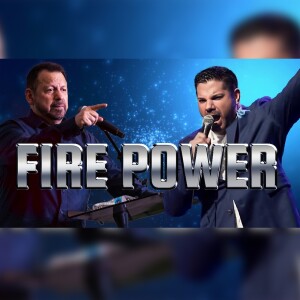
FIREPOWER with Pastor Todd Coconato & Mario Murillo!
Website: www.PastorTodd.org
To support this ministry: www.ToddCoconato.com/give
Friday Jun 02, 2023
Friday Jun 02, 2023
Sunday Service @ The Remnant with Pastor Todd Coconato
To go to our website please visit: www.PastorTodd.org
To help us support this ministry, please go to www.ToddCoconato.com/give

Friday May 26, 2023
Friday May 26, 2023
wesbite: www.PastorTodd.orgto give: www.ToddCoconato.com/give
In 2 Timothy 4:7, Paul says, “I have fought the good fight, I have finished the race, I have kept the faith.” This well-known and oft-quoted passage is quite significant in that this epistle was Paul’s last before his martyrdom in A.D. 67. It is a deeply moving affirmation of his unwavering faith and unyielding love for the gospel of Jesus Christ (Galatians 1:4; Galatians 2:20; Philippians 1:21).
“I have fought the good fight” is also significant for believers today because it serves as a stark reminder that the Christian life is a struggle against evil—within ourselves and in the world (John 15:9; Romans 8:7; James 4:4). Earlier in this same epistle, Paul reminded Timothy to “endure hardship as a good soldier of Jesus Christ” (2 Timothy 2:3).
The Greek word agonizomai, translated “fought,” means literally “to engage in conflict.” The word was used in the context of competing in athletic games or engaging in military conflict. Considering that Paul was chained to a Roman soldier when he wrote this epistle, it would have been easy for him to make such an analogy. In fact, he had known many Roman soldiers and during his imprisonment had won a number of them to Christ, some of them members of the Praetorian Guard (Philippians 1:13).
Our battle is not with flesh and blood “but against principalities, against powers, against the rulers of the darkness of this age, against spiritual hosts of wickedness in the heavenly places” (Ephesians 6:12). The Christian life is a fight in that Christians face a never-ending struggle against evil—not an earthly military campaign, but a spiritual battle against Satan. This is why we must “take up the whole armor of God, that you may be able to withstand in the evil day” (see Ephesians 6:13-18).
Without question, the apostle Paul was the consummate warrior, never quitting, never flagging in his zeal for the Lord (Philippians 3:14-15). He knew where lay the source of his strength (Philippians 4:13; 2 Corinthians 12:9). His campaign to spread the gospel of Christ began on the Damascus Road (Acts 9:3) and eventually took him across the ancient world on four missionary journeys. He had witnessed of Christ before Felix and Agrippa, the legates and officials of Rome (Acts 23:26; Acts 26:1). He contended with false teachers and false brethren within the church (2 Corinthians 11:13; Galatians 1:7; Galatians 2:4).
Paul’s “good fight” included an astonishing series of dangers and indignities (2 Corinthians 11:23-33). Even in these he proclaimed his victory in Christ: “Yet in all these things we are more than conquerors through Him who loved us” (Romans 8:37).
Paul’s life and ministry provide for us a powerful example for modeling Christ today. Not only did he “fight the good fight,” but he also “finished the race” and “kept the faith” (2 Timothy 4:7). Paul knew that his death was near (verse 6) but had no regrets. After Jesus took control of his life (Acts 9:15-16), Paul had lived life to the fullest, fulfilling all that Jesus had charged and empowered him to do (Ephesians 3:6; 2 Timothy 4:17). He had a remarkable sense of fulfillment and contentment with his life (Philippians 4:11-13; 1 Timothy 6:6-8).
As believers today, we can have no greater sense of fulfillment than to know, as Paul did, that we have fully accomplished all that the Lord has called us to do (Matthew 25:21). May we “fight the good fight” and “be watchful in all things, endure afflictions, do the work of an evangelist, fulfill [our] ministry” (2 Timothy 4:5).

Friday May 26, 2023
Friday May 26, 2023
Todd Coconato Radio Show I When Is It Biblically OK To Call People Out? | Beware the Wolves
Website: www.PastorTodd.orgTo support this ministry: www.ToddCoconato.com/give
So let’s begin with Jesus. Matthew 7:15: “Beware of false prophets, who come to you in sheep’s clothing but inwardly are ravenous wolves.” And the word beware means all of us should be alert, but especially shepherds, to identify not just false teaching, but false teachers, whose ways are subtle. They’re clothing themselves with lamb’s wool while they’re wolves.
And Paul used the same Greek word for beware in Acts 20:28–29 when he said, “Pay careful attention to yourselves and to all the flock, in which the Holy Spirit has made you overseers. . . . I know that after my departure fierce wolves will come in among you, not sparing the.”
“In order to protect the flock, we should expose false teachers and minimize the spread of the gangrene.”Jesus used the same word again in Matthew 16:6, but he got more specific: “Watch and beware of the leaven of the Pharisees and Sadducees.” Paul had the same kind of group in mind and the same kind of error in mind in Philippians 3:2 and 3:18: “Look out for the dogs, look out for the evildoers, look out for those who mutilate the flesh.” And then verse 18: “For many, of whom I have often told you and now tell you even with tears, walk as enemies of the cross of Christ.” Then in Romans 16:17, he warned, “Watch out for those who cause divisions and create obstacles contrary to the doctrine that you have been taught; avoid them.”
Avoid, Rebuke, Call Out
To avoid them, you have to know who they are. You can’t avoid somebody if you don’t know who they are. This idea of identifying and avoiding shows up in 1 Corinthians 5:11; 2 Thessalonians 3:6, 14; 2 Timothy 3:5; 2 John 10. In other words, Christians, and shepherds in particular, should be discerning and alert to behavior and teaching that dishonors Christ and destroys people — and not treat it in a casual or harmless way.
And then in 1 Timothy 5:19–20, Paul went beyond just “avoid them” to “rebuke them publicly.” So, speaking of elders who persist in error, he said, “Do not admit a charge against an elder except on the evidence of two or three witnesses. As for those who persist in sin” — and that can be sin of false doctrine or sin of evil behavior, anyone who does not accept correction — “rebuke them in the presence of all, so that the rest may stand in fear..”
And then Paul went on and actually named destructive false teachers:
“Demas, in love with this present world, has deserted me” (2 Timothy 4:10).“You are aware that all who are in Asia turned away from me, among whom are Phygelus and Hermogenes” (2 Timothy 1:15).“By rejecting this [faith and a good conscience], some have made shipwreck of their faith, among whom are Hymenaeus and Alexander” (1 Timothy 1:19–20).“Their talk will spread like gangrene. Among them are Hymenaeus and Philetus” (2 Timothy 2:17).Paul names at least six false teachers that the church should watch out for.
So, I infer from Jesus and Paul and Luke and John that false teaching and destructive behavior are present dangers in this fallen world for the church. And all of us — especially shepherds, pastors — should be alert and discerning to identify and, in appropriate ways, expose. In order to protect the flock, we should expose them and minimize the spread of the gangrene (as Paul calls it).
Expose Evil
Now, in 1 Corinthians 4:5, Paul is talking about how the Corinthians should assess Paul and Cephas and Apollos, because the people are choosing sides and boasting in their favorite teacher. He says,
I am not aware of anything against myself, but I am not thereby acquitted. It is the Lord who judges me. Therefore do not pronounce judgment before the time, before the Lord comes, who will bring to light the things now hidden in darkness and will disclose the purposes of the heart. Then each one [Paul, Cephas, Apollos] will receive his commendation from God. (1 Corinthians 4:4–5)“The best protection against the darkness of error is the light of truth.”So Caden is asking whether the words “do not pronounce judgment before the time” should keep us from identifying false teachers or from naming them. I don’t think so. “Don’t pronounce judgment before the time” means “Don’t do what only Christ can do at that last day — on the day of judgment.” Don’t presume to know the heart like Jesus will know the heart on that day. Only Christ “will bring to light the things now hidden in darkness and will disclose the purposes of the heart.”
But for now, our job is indeed to do mouth judgment, writing judgment, behavior judgment — not a heart judgment, but mouth and writing and behavior judgment. When a mouth speaks unbiblical, destructive teaching, when a blog or an article or a book publishes unbiblical and destructive teaching, when a body — a human body, a physical body — behaves with unbiblical and destructive behavior, in all these cases, we are to be discerning. And according to Ephesians 5:11, we are to expose the error. “Take no part in the unfruitful works of darkness, but instead expose them.” “Censure them; show them to be wrong” is what the word elegchō means.
Five Factors for Calling Out False Teachers
So the question is how and when — not if. And here I think the Bible calls for wisdom, rather than telling us who and when and how. The question we ask is this: How can we best — in our situation, with our gifts and our responsibilities — help the most people believe and live the most truth, and how can we protect the most people from destructive beliefs and behaviors?
And here are five factors perhaps to consider when deciding whether to name a false teacher publicly.
The seriousness and deceitfulness of the error.The size of the audience. Is it growing?The duration of their ministry. Did they make one blunder or are they constantly doing it?The vulnerability of the people for whom you are responsible.The role you have in influencing shepherds who really need to be discerning for who the false teachers are.When you do name a false teacher, it’s best to do it in a setting where you do more than name-drop. You explain the error, you give reasons for rejecting it, you communicate complexities, you set a tone of longing for truth and love — you’re not just slinging mud.
The last thing I would say is to let your teaching be so powerful in clarifying the greatness and the beauty and the worth of God’s truth that your people will smell error before it infects their lives. The shape of error is always changing. You can’t preach enough negative sermons to stay ahead of it. And you don’t have to. The best protection against the darkness of error is the light of truth.
Monday May 22, 2023
Monday May 22, 2023
Sunday Service @ The Remnant with Pastor Todd | What happens when we die?
Website: www.PastorTodd.org
To give and support this ministry: www.ToddCoconato.com/give
Within the Christian faith, there is a significant amount of confusion regarding what happens after death. Some hold that after death everyone “sleeps” until the final judgment, after which everyone will be sent to heaven or hell. Others believe that at the moment of death people are instantly judged and sent to their eternal destinations. Still others claim that, when people die, their souls/spirits are sent to a “temporary” heaven or hell to await the final resurrection, the final judgment, and the finality of their eternal destination. So, what exactly does the Bible say happens after death?
First, for the believer in Jesus Christ, the Bible tells us that after death believers’ souls/spirits are taken to heaven, because their sins were forgiven when they received Christ as Savior (John 3:16, 18, 36). For believers, death means being “away from the body and at home with the Lord” (2 Corinthians 5:6–8; Philippians 1:23). However, passages such as 1 Corinthians 15:50–54 and 1 Thessalonians 4:13–17 describe believers being resurrected and given glorified bodies. If believers go to be with Christ immediately after death, what is the purpose of this resurrection? It seems that, while the souls/spirits of believers go to be with Christ immediately at death, the physical body remains in the grave “sleeping.” At the resurrection of believers, the physical body is resurrected, glorified, and reunited with the soul/spirit. This reunited and glorified body-soul-spirit will be the state of existence for believers for eternity in the new heavens and new earth (Revelation 21—22).
Second, for those who do not receive Jesus Christ as Savior, death means everlasting punishment. However, similar to the destiny of believers, it seems that unbelievers also go to a temporary holding place to await their final resurrection, judgment, and eternal destiny. Luke 16:22–23 describes a rich man being tormented immediately after death. Revelation 20:11–15 describes all the unbelieving dead being resurrected, judged at the great white throne, and cast into the lake of fire. Unbelievers, then, are not sent to hell (the lake of fire) immediately after death, but they are rather sent to a temporary realm of judgment and anguish. The rich man cried out, “I am in agony in this fire” (Luke 16:24).
After death, a person resides in either a place of comfort or in a place of torment. These realms act as a temporary “heaven” and a temporary “hell” until the resurrection. At that point, the soul is reunited with the body, but no one’s eternal destiny will change. The first resurrection is for the “blessed and holy” (Revelation 20:6)—everyone who is in Christ—and those who are part of the first resurrection will enter the millennial kingdom and, ultimately, the new heavens and new earth (Revelation 21:1). The other resurrection happens after Christ’s millennial kingdom, and it involves the wicked and unbelieving being “judged according to what they had done” (Revelation 20:13). These, whose names are not in the book of life, will be sent to the lake of fire to experience the “second death” (Revelation 20:14–15). The new earth and the lake of fire—these two destinations are final and eternal. People go to one or the other, based entirely on whether they have trusted Jesus Christ for salvation (Matthew 25:46; John 3:36).

Friday May 19, 2023
Friday May 19, 2023
Pastor Todd Coconato I Live on "Let the Truth Be Told" with Pastor David L. Lowery JR.
Website: www.PastorTodd.orgTo support this ministry: www.ToddCoconato.com/give

Friday May 19, 2023
Friday May 19, 2023
Pasto Todd Coconato I LIVE at ReAwaken America: The ReAwakening versus The Great Reset - Trump Doral, Miami, FL
thrivetimeshow.comWebsite: www.PastorTodd.orgTo support this ministry: www.ToddCoconato.com/give

Friday May 19, 2023
Friday May 19, 2023
If I were a globalist who wanted to get the United States to be in balance with the Third World in order to consolidate power and prepare for an eventual new form of currency, a new world order...
Website: www.PastorTodd.orgTo support this ministry: www.ToddCoconato.com/give
Friday May 19, 2023
Friday May 19, 2023
Website: www.PastorTodd.orgTo support this ministry: www.ToddCoconato.com/give
Are you right with God? What if the Lord were to come back today? Would you be on your way to heaven? Well, a lot of people have this question. They're not sure. so I want to make sure that you're sure. How do I get right with God if you need to get right with God?